What Does My Payslip Need to Show to Get a Mortgage?

Author: Jack Freestone
Finance Writer at Boon Brokers

Reviewed by: Gerard Boon
Managing Director at Boon Brokers

Estimated Read Time: 5 Minutes
Your payslip should clearly show your name, employer, pay date, earnings, deductions, and any variable income, such as overtime or bonuses.
With so many documents required for a mortgage, it can be very easy to assume that your payslips are just another piece of paper that you simply need to throw into the submission pile. However, lenders will use your payslips to assess far more than you might think.
In this article, we explore exactly what lenders will be looking for on payslips for mortgage applications, how payslips are used, and the common issues that could delay your mortgage approval. Let’s begin.
In this article...
- Why Are Payslips Important for Mortgage Applications?
- Key Information Lenders Look for on Payslips
- How Many Payslips Do You Need for a Mortgage?
- How Do Lenders Verify Payslip Information?
- Common Payslip Issues That Can Delay Approval
- Can a Mortgage Broker Help With My Payslip Requirements?
- Frequently Asked Questions
Why Are Payslips Important for Mortgage Applications?
Payslips are important as they provide evidence of your employed income that allows lenders to verify your earnings and assess how much you could afford to borrow.
When a lender asks for your payslips, they are not simply ticking a box as to whether you receive a monthly salary.
Instead, the information shown on your payslips can help them to build a clearer picture of your income reliability. This includes whether your earnings are consistent and whether your declared income appears affordable alongside any existing financial commitments.
Ultimately, lenders are trying to assess the risk of future affordability problems by checking that your income is stable enough to support the costs of a mortgage both now and in the future.
In cases where monthly earnings include overtime, bonuses, commission, or shift allowances, additional payslips may be requested as further evidence to help underwriters assess how consistent those additional income sources have been over time.
It’s important to note that lenders will always review your payslips alongside the rest of your mortgage application. Bank statements, employment details, credit history, and additional documents such as a P60 can all help underwriters understand your overall financial position.
Together, these documents will help lenders carry out their own unique income verification checks and confirm that the income declared on your application is consistent across your supporting documents.
See What Our Clients Have To Say...
Key Information Lenders Look for on Payslips
Lenders review every section of your payslip to understand how your income is structured and how it contributes towards your overall mortgage affordability.
Each section of a payslip can help underwriters understand how you are paid, whether your income appears consistent, and whether there are any deductions or changes that may need further clarification during the mortgage process.
Most importantly, when lenders review your payslips, they are not just focusing on one specific figure or detail but the entire breakdown of how your income is made up.
While some payslips will show a fixed salary each month, others may include additional payments such as overtime, bonuses, commission, or shift allowances.
To help you better understand the essential payslip information for mortgage underwriting, we’ve created a table that breaks down each section of a payslip and explains why it matters to lenders during the mortgage process:
What Lenders Look for on Payslips
| Category | Key Information | Why It Matters to Lenders |
| Identity & Consistency | Full Name & Address | Helps confirm the payslip belongs to you and matches the information shown elsewhere on the application. |
| Employer Details | Employer Name | Helps confirm who you work for (employer) and where your income is coming from. |
| Payment Frequency | Pay Date & Period | Shows how regularly you are paid, whether weekly, fortnightly, or monthly. |
| Gross Income | Basic Salary / Gross Pay | Gives lenders a starting point for understanding your overall income before deductions. |
| Variable Income | Overtime, Bonuses, & Commission | Helps lenders assess whether additional income appears regular enough to be included within affordability checks. |
| Net Income | Take-Home Pay | Allows lenders to compare your payslip against the salary payments entering your bank account. |
| Statutory Deductions | Tax & National Insurance | Helps confirm standard PAYE deductions and that income is being processed normally through payroll. |
| Financial Commitments | Student Loans & Pension Contributions | Gives lenders a clearer picture of your regular monthly commitments and remaining disposable income. |
| Benefit Deductions | Salary Sacrifice Arrangements | Highlights reductions to your monthly pay that could affect affordability calculations. |
Understanding what lenders look for on your payslip can help you prepare your mortgage application more effectively.
In Boon Brokers’ 2026 study into what causes mortgage application stress, we found that 21% of respondents listed “proving their income” as one of the most stressful parts of the mortgage application process. This data highlights the importance of ensuring your payslips are accurate and up-to-date to help avoid any delays or require further clarification
However, not all mortgage applicants will use payslips as proof of income. If you are self-employed, lenders will normally assess your income using documents such as Tax Calculations (SA302), Tax Year Overviews, business accounts, and bank statements instead.
If you are self-employed and would like to learn more about the documents lenders may request, read our guide on the mortgage requirements for freelancers and contractors.
How Many Payslips Do You Need for a Mortgage?
Lenders will usually request your latest three months of payslips when assessing a mortgage application.
While most lenders will require at least three months of payslips, the exact number of payslips needed can vary depending on your chosen lender’s criteria, how you are paid, how long you have been in your current role, and the complexity of your income structure.
- Monthly salaried income: Latest 3 months of recent payslips.
- Weekly paid income: Usually between 8 and 13 weeks of payslips.
- Overtime, bonuses, or commission: Additional payslips may be requested to help demonstrate income patterns over time.
- Recently started a new job: Payslips may be requested alongside an employment contract.
- Seasonal or fluctuating income: A longer payslip history may be needed to help lenders calculate average earnings more accurately.
As a general rule, the number of payslips required for mortgage applications will often be lower for applicants receiving a fixed salary with consistent earnings. The reason for this is that straightforward income can be easier for lenders to assess and can make affordability calculations quicker to process.
For those with more complex income structures, such as overtime, bonuses, commission, or shift allowances, lenders may request additional evidence to verify the consistency of any additional income.
Ultimately, the number of payslips requested will depend on how much information a lender needs to fully understand your income.
Applicants with straightforward earnings may only need a relatively short payslip history, while those with changing income patterns may be asked to provide additional evidence to help lenders build a clearer picture of annual income over time.
Speak to a Mortgage Adviser
Receive fee-free advice on proving your income and finding the right mortgage lender.
How Do Lenders Verify Payslip Information?
Lenders will verify payslips by checking that the information matches your bank statements, employment details, and other supporting documents that are submitted with your mortgage application.
As part of the underwriting process, lenders will compare the information shown on your payslips against the rest of your mortgage application. This is to ensure all the details provided appear consistent and accurate across the wider mortgage application.
Specifically, the mortgage payslip verification process will often involve checking salary payments against recent bank statements, reviewing employer details, and making sure the income declared on the application matches the information shown across your supporting documents.
As part of the income verification checks, lenders will assess:
- Differences between declared income and payslip figures
- Large or sudden changes in overtime or bonus payments
- Missing employer details or unclear information
- Unexpected deductions or noticeable salary changes
- Payslips that appear altered, incomplete, or inconsistent
In some situations, lenders may also contact your employer or request additional signed supporting documents. This is usually only required in situations where payslips appear unclear, handwritten, or different from the rest of the information provided during the application.
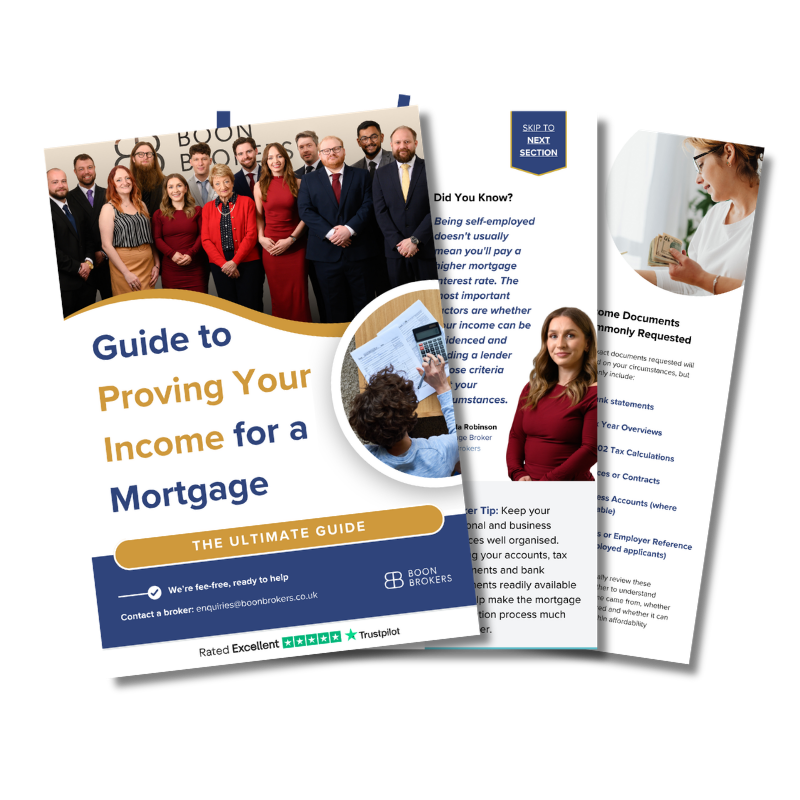
Download Our Free Mortgage Income Guide
Understand lender income requirements and avoid mistakes before applying for your mortgage.
Common Payslip Issues That Can Delay Approval
The most common payslip issues that delay mortgage approval are missing information, inconsistencies, or anything that prevents lenders from easily verifying your income.
The most common mistakes that lead to delays in a mortgage application will usually come down to small inconsistencies rather than major financial problems.
All information provided within your mortgage application needs to be clear and easy for lenders to review. That’s why something as simple as uploading an outdated payslip, providing cropped screenshots, or submitting documents that do not fully match your bank statements can lead to additional underwriting questions.
Common payslip issues could include:
- Missing employer details
- Incorrect personal information or addresses
- Payslips that appear edited, incomplete, or difficult to read
- Large fluctuations in overtime or bonus payments
- Duplicate or overlapping pay periods
- Payslips that fall outside a lender’s accepted timeframe
It’s important to note here that The documents needed for a mortgage in principle can differ from those required for a full mortgage application, so it is worth checking which evidence your lender needs at each stage.
Ultimately, while errors or inconsistencies can sometimes delay a mortgage application, they do not automatically mean your application will be refused. In most cases, lenders will simply ask for clarification or updated documents before moving the application forward.

Can a Mortgage Broker Help With My Payslip Requirements?
Yes, a mortgage broker can help ensure your payslips and proof of income are presented correctly and match with the criteria of your chosen lender.
Preparing the correct payslips is only one part of a successful mortgage application. A mortgage broker can help ensure your proof of income is complete, presented clearly, and supported by the right documents, before your application reaches a lender.
At Boon Brokers, our experienced fee-free mortgage advisers can compare lenders across the whole market to help you find a lender that matches your needs.
Whether your income comes from a fixed salary, overtime, bonuses, commission, or multiple jobs, we can ensure that your application is supported by the right documentation to avoid delays and improve your chances of approval.
Need Mortgage Advice?
Submit an Enquiry
Frequently Asked Questions
Do Lenders Accept Digital Payslips?
Yes, most mortgage lenders today will now accept digital payslips as standard, especially where employers use online payroll systems. Digital payslips are generally treated the same as printed versions, and so it remains vital that all information provided is clear, complete, and easy to verify.
What Happens If Payslips and Bank Statements Don’t Match?
Lenders will usually ask you to explain any differences between your payslips and bank statements before continuing with your mortgage application. Many differences can be explained by payroll timing, deductions, overtime, or bonus payments.
Will Handwritten Payslips Affect Mortgage Approval?
Yes, handwritten payslips can lead to additional checks, but they do not automatically prevent you from getting a mortgage. Lenders may ask for further proof of income or employer confirmation before making a decision.
Jack Freestone
I’m an established content writer at Boon Brokers, where I write and publish financial and mortgage-focused content across the UK property and lending marketplace. My work covers topics including first-time buyers, remortgaging, equity release, and wider market developments affecting borrowers. I hold a Master’s degree in English Literature from the University of Bedfordshire, graduating with distinction. Since then, I’ve worked across freelance, agency, and in-house roles, building experience writing across a range of subjects, with a focus on topics that directly affect everyday consumers. Today, my writing focuses on making complex financial topics clearer, more practical, and easier for everyday readers to understand.Related Articles
- What Are the Bank Statement Requirements to Get a Mortgage?
- How Do Self-Employed Applicants Prove Income for a Mortgage?
- Can I Get a Mortgage with a Signed Employment Contract?
- Can Overtime Income Be Used in a Mortgage Application?
- What Happens if You Can’t Prove Income for a Mortgage?
- How Do You Prove Income on a Zero-Hour Contract for a Mortgage?
- Can Bonus and Commission Income Be Used in a Mortgage Application?
- How Is Rental Income Used in Mortgage Applications?
- Can I Use Cash Income in a Mortgage Application?
- How Do Part-Time Workers Prove Income for a Mortgage?
- What Are the Mortgage Income Requirements for Agency Staff?
- Can Mortgage Lenders Consider Multiple Income Streams?