How Do Part-Time Workers Prove Income for a Mortgage?

Author: Jack Freestone
Finance Writer at Boon Brokers

Reviewed by: Gerard Boon
Managing Director at Boon Brokers

Estimated Read Time: 5 Minutes
Part-time workers will need to provide recent payslips, bank statements and P60s to prove their total earnings when applying for a mortgage.
A part-time income mortgage is assessed in much the same way as a traditional residential mortgage application. It all comes down to your total income, supporting evidence and how reliable this income is likely to continue.
Whether you work reduced hours, combine multiple part-time jobs or have a flexible working pattern, lenders are primarily interested in whether your income can be evidenced and is sufficient to support your mortgage repayments.
In this article, we explain exactly how mortgage lenders assess part-time earnings, what documents you need to provide and how you can strengthen your mortgage application. Let’s begin.
How Do Mortgage Lenders Assess Part-Time Income?
Mortgage lenders assess part-time income by reviewing your earnings, employment history, income stability and overall affordability. They may also consider additional income sources where they are consistent and well evidenced.
Mortgage lenders will usually assess part-time income for a mortgage application in the same way as full-time employment income. Rather than focusing on your job title or contracted hours, they will assess whether your total income is sufficient to support your mortgage repayments.
Where income is earned from multiple part-time roles or demanding working patterns, some lenders may take a closer look at whether that level of work and earnings is realistic and likely to continue throughout the mortgage term.
When carrying out mortgage lender checks for part time workers, lenders will usually review the following:
- Employment type (permanent, temporary, or fixed-term)
- Employment history
- Income evidence (payslips and bank statements)
- Overall affordability
For employed applicants, payslips and bank statements will usually be the main forms of evidence. However, if your hours vary, or your income changes from month to month, lenders may request further documentation to assess a longer period of income in order to understand your average earnings.
Self-employed part-time workers will usually need to provide tax documents as an alternative to standard payslips. This will usually be in the form of Tax Calculations (SA302s), Tax Year Overviews, business accounts, or accountant-prepared documentation to demonstrate earnings over recent tax years.
See What Our Clients Have To Say...
What Mortgage Documents Are Required for Part-Time Income?
Part-time workers will need to provide recent payslips, bank statements, P60s, proof of identity and proof of address when applying for a mortgage. Additional documents can be requested where income varies or comes from multiple jobs.
While the exact documents required will vary between lenders, most part-time workers will need to provide evidence of their income, employment, identity and address. The most common mortgage documents for part-time workers include:
- Recent payslips: Most high street lenders will request your last 3 months’ payslips to verify your income. Some lenders may request a longer history if your earnings vary.
- Bank statements: Usually the last 3 months’ bank statements, used to confirm your income and review your regular financial commitments.
- P60: Your latest P60 helps lenders verify your annual earnings and employment history over the previous tax year.
- Employment contract: Some lenders may request your employment contract to confirm your employment status, contracted hours or length of service.
- Proof of identity: A valid passport or driving licence is typically required to verify your identity.
- Proof of address: A recent utility bill, council tax bill or bank statement is commonly used to confirm your current address.
As a general rule, payslips and bank statements will usually form the foundation of a lender’s income assessment. Together, they help verify your earnings and demonstrate that the income declared on your application is being received into your account.
However, if your hours vary from month to month, lenders may request additional payslips covering a longer period. This allows them to calculate an average income and build a clearer picture of your earnings over time.
Get Expert Mortgage Advice
Let us help you find a lender that accepts part-time work.
Can You Combine Income from Multiple Jobs?
Yes, many mortgage lenders allow for combined income from multiple jobs when assessing affordability. Each income source will need to be evidenced and demonstrate a sustainable pattern of earnings before it is included in affordability calculations.
Combining incomes can be particularly helpful if you’re applying for a part-time employment mortgage as lenders are able to assess your total earnings, rather than each role in isolation.
With that said, it is important to note that lenders will also consider whether it is realistic to maintain all of the jobs included within your mortgage application. They will assess whether your total working hours and overall working pattern are sustainable over the mortgage term.
Let’s take a look at an example in practice:
Example 1: An applicant works two part-time jobs for a total of 36 hours per week. They have held both roles for over two years and their income has remained stable throughout that time.
Example 2: Another applicant earns a higher total income but works 60 hours per week across two demanding part-time jobs with varying shifts.
While the total income might appear higher on paper for someone working a total of 60-hour weeks, lenders will want to be satisfied that the level of work is realistic and sustainable over the mortgage term.
As a result, Example 1 demonstrates a more sustainable working pattern and would be more likely to meet a lender’s criteria and have both income sources included within affordability calculations.
Ultimately, combining multiple jobs for mortgage approval is relatively straightforward where both roles have been held for a reasonable period. If you are unsure how a lender will assess multiple income sources, working with a trusted mortgage broker can help identify lenders whose criteria best match your requirements.
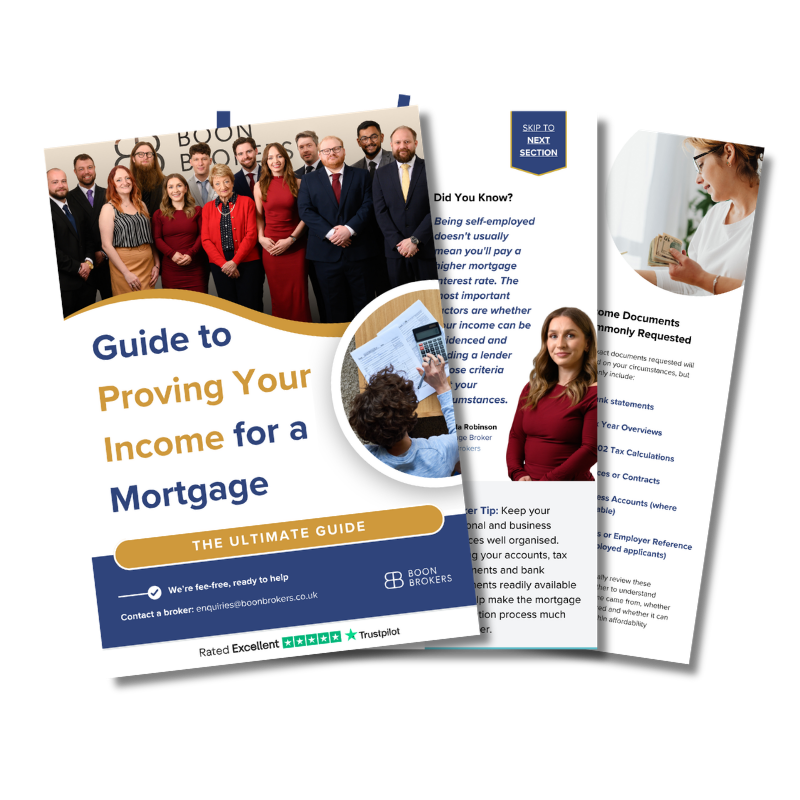
Download Our Free Mortgage Income Guide
Understand lender income requirements and avoid mistakes before applying for your mortgage.
How to Strengthen Your Application
Planning ahead is the best way to strengthen a part-time mortgage application. Maintain a stable income(s), avoid taking on new debt, organise proof of income documents and work with a lender whose criteria suit your employment circumstances.
Whether you’re applying for a mortgage with part-time employment or full-time employment, there are several easy and practical steps you can take that could help strengthen your application before applying.
Many of these improvements are relatively simple, but together they can help bolster your application and strengthen a mortgage application with part-time income.
To help get you started, we’ve highlighted some of the most effective ways to strengthen your mortgage application below:
Top Tips to Strengthen a Part-Time Mortgage Application
| Top Tip | Why It Helps |
| Maintain a stable employment history | Shows lenders your income is established and reliable. |
| Keep your proof of income organised | Speeds up income checks and helps avoid delays. |
| Evidence every income source | Allows lenders to assess all eligible income. |
| Reduce unnecessary outgoings | Can improve affordability and borrowing potential. |
| Check your credit report | Gives you time to correct any errors before applying. |
| Save the largest deposit you can | May increase lender choice and improve mortgage rates. |
| Speak to a mortgage broker | Helps match you with lenders suited to part-time income. |
While there is no guaranteed formula for mortgage approval, taking steps to strengthen your income evidence, affordability, and overall financial position can help place your application in the strongest possible position before approaching a lender.
Get Expert Help Tailored to Your Employment Situation
A mortgage broker can help match part-time workers with lenders whose criteria best suit their income and employment circumstances. They can also review your proof of income before you apply, helping reduce delays and improving your chances of securing a suitable mortgage.
Working part-time will not automatically make it harder to get a mortgage, but each lender will have their own unique criteria when it comes to assessing part-time income. This is why choosing the right lender can be just as important as providing the right proof of income.
At Boon Brokers, we help part-time workers secure the mortgage that meets their needs. From preparing supporting documents to finding lenders whose criteria match their individual circumstances, our expert mortgage advisers will provide you with fee-free mortgage guidance to find the mortgage that matches your needs.
Understanding how to evidence your income is the first step in preparing a mortgage application. For more information on the different proof of income needed for a mortgage, read our complete guide and learn which documents lenders typically request, how different types of earnings are assessed and how you can increase your chances of mortgage approval.
Need Mortgage Advice?
Submit an Enquiry
Frequently Asked Questions
Can I Get a Mortgage Working Part-Time?
Yes, you can get a mortgage with part-time employment if your income is sufficient and can be evidenced. Lenders will assess your income, affordability, and supporting evidence rather than the number of hours you work.
Can I Use Overtime and Part-Time Income for a Mortgage?
Yes, many lenders will accept both overtime and part-time income when assessing affordability. The income will usually need to be consistent and supported by evidence such as payslips, bank statements, and employment history before it can be included within affordability calculations.
Can Two Part-Time Jobs Help Qualify for a Mortgage?
Yes, most lenders will accept the combined income from two part-time jobs when assessing affordability. They will review each source of income separately and consider factors such as employment history, earnings consistency, and whether the working patterns are sustainable.
Can Permanent Part-Time Staff Get the Same Mortgage Rates?
Yes, mortgage rates are generally determined by factors such as affordability, credit history, deposit size, and loan-to-value ratio rather than whether you work part-time or full-time.
Can I Get a Mortgage With Reduced Working Hours?
Lenders will assess your application using your current earnings. If your income still meets the lender’s affordability requirements, reduced working hours should not prevent you from getting a mortgage.
Jack Freestone
I’m an established content writer at Boon Brokers, where I write and publish financial and mortgage-focused content across the UK property and lending marketplace. My work covers topics including first-time buyers, remortgaging, equity release, and wider market developments affecting borrowers. I hold a Master’s degree in English Literature from the University of Bedfordshire, graduating with distinction. Since then, I’ve worked across freelance, agency, and in-house roles, building experience writing across a range of subjects, with a focus on topics that directly affect everyday consumers. Today, my writing focuses on making complex financial topics clearer, more practical, and easier for everyday readers to understand.Related Articles
- How Do Self-Employed Applicants Prove Income for a Mortgage?
- Can I Get a Mortgage with a Signed Employment Contract?
- Can Overtime Income Be Used in a Mortgage Application?
- What Happens if You Can’t Prove Income for a Mortgage?
- How Do You Prove Income on a Zero-Hour Contract for a Mortgage?
- Can Bonus and Commission Income Be Used in a Mortgage Application?
- What Are the Mortgage Income Requirements for Freelancers and Contractors?
- How Is Rental Income Used in Mortgage Applications?
- Can I Use Cash Income in a Mortgage Application?
- What Are the Mortgage Income Requirements for Agency Staff?