What Are the Mortgage Income Requirements for Agency Staff?

Author: Jack Freestone
Finance Writer at Boon Brokers

Reviewed by: Gerard Boon
Managing Director at Boon Brokers

Estimated Read Time: 5 Minutes
Most mortgage lenders require agency workers to provide a minimum of 12 months of employment history, recent payslips, bank statements, and evidence that work is ongoing.
When it comes to getting a mortgage as an agency worker often involves additional affordability checks because your income may vary between assignments. Rather than relying on your latest payslip alone, lenders will usually assess your employment history, income pattern, and any evidence of ongoing or future work.
In this article, we cover everything you need to know about the mortgage income requirements for agency workers, including: how lenders assess agency income, what documents are required and which mortgage lenders accept agency staff. Let’s begin.
In this article...
- How Do Mortgage Lenders View Agency Work?
- What Are the Required Documents for Agency Workers?
- How Will Employment Gaps Affect a Mortgage Application?
- What Is the Minimum Employment History for Agency Staff?
- Which Mortgage Lenders Accept Agency Income?
- How a Broker Can Help You Get Approved
- Frequently Asked Questions
How Do Mortgage Lenders View Agency Work?
Lenders view agency work as higher risk than permanent staff because the income is not guaranteed, often resulting in stricter lending criteria.
From a lender’s perspective, agency workers are technically working on a variable basis as there is no guarantee of income. Because of this, lenders will often carry out additional checks to understand how your earnings have been maintained over time.
With that said, the main concern is not that you work through an agency. Instead, all lenders need to understand is whether or not your earnings show a reliable pattern of income and whether there is sufficient evidence that these earnings can support the mortgage repayments.
While every lender has their own criteria, the mortgage lender requirements agency workers are assessed against can often be very similar. For example, during their assessment, most lenders will be asking the following questions:
- How long have you been working through an agency?
- Have you remained within the same industry or profession?
- Does your earnings history show a reliable pattern over time?
- Have there been any significant gaps between assignments?
- Is there evidence of future work or upcoming contracts?
A common misconception is that fluctuating income between months will automatically prevent you from securing a mortgage. This is not true. In fact, it is commonplace for many agency workers to experience variations in earnings throughout the year.
For this reason, rather than focusing on individual pay periods, lenders will ask for a longer history of earnings in order to understand the complete financial picture.
See What Our Clients Have To Say...
What Are the Required Documents for Agency Workers?
For employed agency workers, lenders typically request their latest 12 months of payslips/invoices and corresponding bank statements as a minimum. For self-employed agency workers, lenders typically request their latest 2 Years of Tax Calculations and Tax Year Overviews.
Some agency workers are employed directly through an agency and taxed under PAYE, while others may work through an umbrella company or operate as a limited company, meaning they are self-employed.
As a result, the documents required to verify your income can vary depending on your working arrangement and the lender’s criteria.
Whether you’re employed through an agency or operate on a self-employed basis, most lenders will request a combination of documents to verify your income, employment history, and overall affordability.
The most common mortgage documents for agency workers include:
- Agency contracts
- Employment contracts
- Proof of future assignments or contract renewals
- Recent payslips
- Bank statements
- P60s
- Tax Calculations (where applicable)
When assessing proof of income for agency staff mortgage applications, lenders will review a combination of payslips, bank statements, contracts, and other records to cross-check all the information being used in their affordability calculations.
Get Expert Mortgage Advice
Get fee-free mortgage advice from specialists who understand agency and contract income.
How Will Employment Gaps Affect a Mortgage Application?
Employment gaps and income history will directly affect the success of your mortgage application. This is because lenders use them both in order to understand how regularly you have been working and earning.
For agency workers, short breaks between assignments are often normal. However, lenders may apply stricter criteria around extended employment gaps and can request to see a clear track record of ongoing employment and income.
The key issue for lenders evaluating gaps in employment comes down to their ability to understand whether those gaps are occasional and short-term, or whether they point towards a pattern of inconsistent earnings and unpredictable employment.
Let’s take a look at an example in practice. There are two agency workers applying for a mortgage:
- Agency Worker A: Has worked continuously through the same agency for three years, with a single four-week gap between assignments.
- Agency Worker B: Has worked through the same agency for three years but has experienced several employment gaps, each lasting two to three months.
In this example, a lender would typically find Agency Worker A’s income easier to assess because their employment history shows fewer and shorter interruptions to their earnings. Agency Worker B may still be approved, but the lender is more likely to request additional evidence to understand how those longer gaps have affected their income and affordability.
Ultimately, lenders prefer to see a well-established pattern of earnings. This gives them greater confidence that the mortgage will remain affordable over the long term.
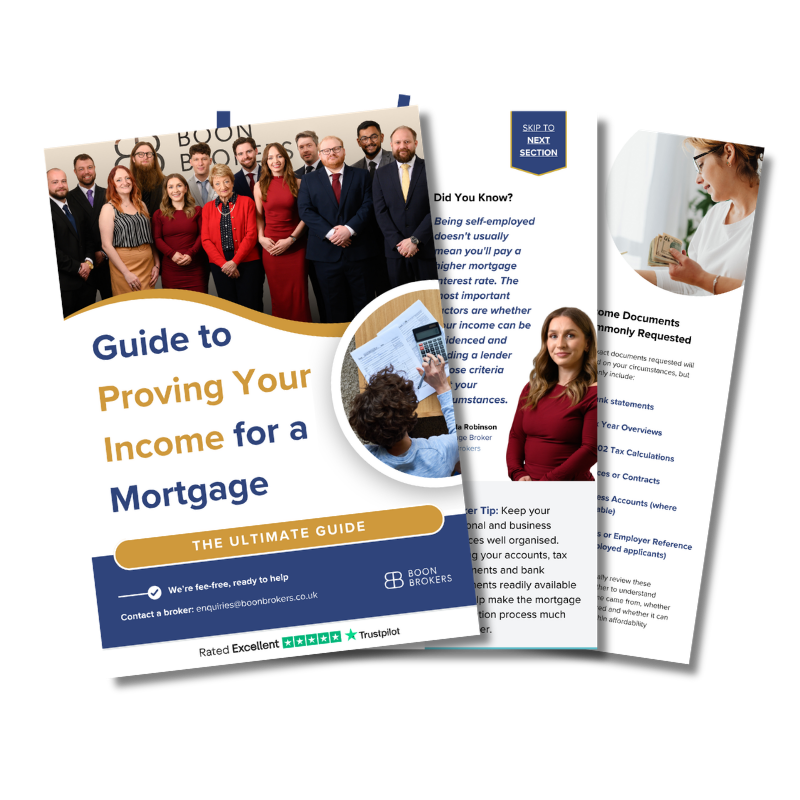
Download Our Free Mortgage Income Guide
Understand lender income requirements and avoid mistakes before applying for your mortgage.
What Is the Minimum Employment History for Agency Staff?
Mortgage lenders typically require a minimum of 12 months employment history before they consider a mortgage application from an agency worker.
One of the most common questions we get asked by agency staff workers is: How long do I need to work through an agency to get a mortgage?
Many lenders will require agency workers to demonstrate a minimum of 12 months of employment history before they will consider a mortgage application. In addition, some lenders may also assess your employment history within the same industry and evidence of ongoing employment.
While requirements vary between lenders, the table below provides examples of some of the most common employment history requirements for agency workers.
Employment History Requirements for Agency Worker Mortgages
| Assessment | Common Lender Requirements |
| Agency Work History | Around 12 months of employment history to demonstrate earnings and employment patterns. |
| Industry Experience | Around two years in the same industry can strengthen your application by showing established experience. |
| Gaps Between Assignments | Short or explainable gaps are generally easier for lenders to assess than frequent or lengthy breaks. |
| Income Evidence | Typically three to six months’ payslips, a P60, and supporting bank statements where required. |
| Future Work Arrangements | Evidence of upcoming assignments or contract renewals can help demonstrate that work is likely to continue. |
While these are some of the most common employment history requirements for agency staff, it’s important to note that every lender has their own lending criteria. Some may be willing to consider applicants with a shorter employment history, particularly where other aspects of the application are strong.
Which Mortgage Lenders Accept Agency Income?
Over 70 mortgage lenders in the UK currently accept income from agency workers.
The good news is that many mainstream mortgage lenders are willing to accept agency income, provided you meet their individual lending criteria and can provide sufficient proof of income.
However, it is important to note that the way agency income is assessed can vary significantly between each lender, particularly where earnings fluctuate significantly.
To provide a general overview, we’ve created a table below that highlights some of the mainstream mortgage lenders that may consider applications from agency workers.
High Street Mortgage Lenders Accepting Agency Work Income
| Skipton Building Society |
| Virgin Money |
| Santander |
| Barclays |
| HSBC |
| Nationwide |
| Halifax/Lloyds |
| NatWest |
| TSB |
| Accord |
| Leeds Building Society |
| Coventry Building Society |
| Co-Operative Bank |
| Bank of Ireland |
As with all mortgage lending, it is important to keep in mind that lending criteria can change over time and individual circumstances will always have a direct effect on the success of a mortgage application.
Rather than struggling searching through online comparison websites and mortgage listings alone, a trusted mortgage broker can simplify the steps you need to take to secure a mortgage.
How a Broker Can Help You Get Approved
A mortgage broker can help agency workers find lenders whose criteria are suited to their unique employment history and income structure. They can also review your documents before you apply, helping reduce delays and improve your chances of mortgage approval.
The frustrating part of any mortgage application, and particularly for agency workers, is gathering all the documentation and evidence needed to verify your income, employment history, and overall affordability.
Whether you need help understanding which documents are required, obtaining copies of previous contracts, or demonstrating a track record of ongoing work, working with a trusted mortgage broker can help streamline the process by providing professional clarity on exactly what lenders will expect.
At Boon Brokers, our fee-free mortgage advisers help agency workers understand what lenders are looking for and how to present their income in the strongest possible way. Whether you are concerned about employment gaps, proving your income history, or finding a lender that understands agency work, we can help you explore your options and prepare for the next stage of your mortgage journey.
Before you apply for a mortgage, it’s worth understanding exactly how mortgage lenders use proof of income to verify your earnings and assess affordability. Our guide explains what proof of income is needed for a mortgage, from the documents lenders request to how different income types are assessed.
Need Mortgage Advice?
Submit an Enquiry
Frequently Asked Questions
Can Temporary Workers Qualify for a Mortgage?
Yes, many lenders will accept temporary workers, including agency staff, provided they can demonstrate a reliable income history and meet affordability requirements.
Do Mortgage Lenders Prefer Permanent Employment?
Yes. Permanent employment is often easier for lenders to assess because income is typically more predictable, helping reduce the uncertainty associated with long-term lending.
Can Newly Employed Agency Workers Get a Mortgage?
Many mortgage lenders prefer at least 12 months of agency employment history before accepting a mortgage application, however, some lenders may consider shorter histories.
Can Agency Nurses and Agency Teachers Get a Mortgage?
Yes. Agency nurses and agency teachers can apply for a mortgage in the same way as other agency workers, with lenders assessing their employment history, proof of income, and affordability.
How Do Agency Workers Prove Income for a Mortgage?
Agency workers usually prove their income by providing documents that verify both their earnings and employment history. Lenders commonly request payslips, bank statements, employment or agency contracts, P60s, and, where available, evidence of future work.
Jack Freestone
I’m an established content writer at Boon Brokers, where I write and publish financial and mortgage-focused content across the UK property and lending marketplace. My work covers topics including first-time buyers, remortgaging, equity release, and wider market developments affecting borrowers. I hold a Master’s degree in English Literature from the University of Bedfordshire, graduating with distinction. Since then, I’ve worked across freelance, agency, and in-house roles, building experience writing across a range of subjects, with a focus on topics that directly affect everyday consumers. Today, my writing focuses on making complex financial topics clearer, more practical, and easier for everyday readers to understand.Related Articles
- What Are the Bank Statement Requirements to Get a Mortgage?
- How Do Self-Employed Applicants Prove Income for a Mortgage?
- What Does My Payslip Need to Show to Get a Mortgage?
- Can I Get a Mortgage with a Signed Employment Contract?
- Can Overtime Income Be Used in a Mortgage Application?
- What Happens if You Can’t Prove Income for a Mortgage?
- How Do You Prove Income on a Zero-Hour Contract for a Mortgage?
- Can Bonus and Commission Income Be Used in a Mortgage Application?
- What Are the Mortgage Income Requirements for Freelancers and Contractors?
- How Is Rental Income Used in Mortgage Applications?
- Can I Use Cash Income in a Mortgage Application?
- How Do Part-Time Workers Prove Income for a Mortgage?
- Can Mortgage Lenders Consider Multiple Income Streams?