Can Overtime Income Be Used in a Mortgage Application?

Author: Jack Freestone
Finance Writer at Boon Brokers

Reviewed by: Gerard Boon
Managing Director at Boon Brokers

Estimated Read Time: 5 Minutes
Yes, mortgage lenders will accept overtime income, provided you can provide evidence that it forms a consistent part of your total earnings.
The good news is that overtime income can be included in mortgage affordability calculations to help increase the total amount lenders will be happy to lend you. However, the challenge is that not all lenders will assess overtime income in the same way.
In this article, we walk you through exactly how lenders assess overtime earnings, what proof of income is required, and how including overtime could affect your mortgage application. Let’s begin.
How Do Lenders Assess Overtime Income?
Mortgage lenders will compare your overtime income across recent payslips and bank statements to assess whether it has been earned consistently enough to include within affordability calculations.
Overtime income can be included in a mortgage application, but lenders will want to see that any additional income is consistent and likely to continue long term.
To create a clear picture of how stable and reliable your overtime income has been, lenders will assess:
- Your job title and related industry
- How frequently overtime has been completed and paid
- History or backlog of receiving overtime income
- Whether the overtime has remained reasonably consistent over time
- Conditions surrounding any employee overtime (guaranteed or voluntary)
- Whether this additional income appears sustainable long term
In cases where overtime or other payment enhancements are subject to availability, lenders will be more cautious. This is because overtime hours can often fluctuate between months and are not always guaranteed within an employment contract.
For example, a PAYE employee might have the option to work additional overtime hours while also being limited to the staff quota or amount of hours each year. Additionally, some businesses may only offer additional overtime hours during certain seasonal busy periods.
Guaranteed overtime hours that are written into an employment contract are likely to be viewed more positively than any voluntary overtime that depends on staffing levels or demand.
Ultimately, overtime income will typically depend on future staffing levels, workload, or changes within an industry, mortgage lenders will need to assess whether it is likely to continue before including it within a mortgage application.
Lender policies can vary quite significantly and there is an important distinction to be made:
Lenders May Accept 100% of Overtime Income
Some lenders may be willing to use 100% of overtime income within their affordability calculations, as long as the overtime is proven to be consistent over a long period and forms a reliable part of the applicant’s overall income.
Lenders May Average Overtime Income
Some lenders may average overtime income across a set period when assessing affordability. This helps them assess how consistent the additional income has been over time.
Lenders May Limit or Exclude Overtime Income
Others may place limits on how much overtime can be used, average the income across a set period, or potentially disregard overtime altogether if the income appears too irregular.
Because of this, finding the right lender can make all the difference when you’re planning to include overtime income in your mortgage application. In Boon Brokers’ 2026 Mortgage Application Stress Study, we found that 28% of borrowers listed that “finding the best mortgage deal” was one of the most stressful parts of the mortgage application process.
For applicants relying on overtime income, choosing a lender whose affordability criteria recognises variable earnings can have a significant impact on both borrowing potential and mortgage options.
See What Our Clients Have To Say...
What Evidence Is Required by Mortgage Lenders?
To verify overtime income, mortgage lenders will usually review recent payslips alongside bank statements and may also request additional documents, such as a P60 or employer letter.
There are several different documents that can help evidence your total income, with overtime income for mortgage applications usually being assessed across multiple documents rather than one specific document alone.
To help you understand the different types of documents that lenders can request, we have created a checklist below of the most common documents lender will ask for when assessing overtime income for a mortgage:
Examples of Evidence Requirements for Overtime Income
| Document | Lenders May Request | How This Can Help |
| Payslips | The latest 3 to 6 consecutive payslips | Clear payslips showing overtime allows them to calculate an average income and separate overtime figure |
| Bank Statements | The latest 3 months | Confirms salary payments match the income shown on payslips |
| P60 | Most recent tax year summary | Shows total annual earnings and longer-term income stability |
| Employment Contract | Copy of employment terms | Clarifies whether overtime is guaranteed, contractual, or voluntary |
Supporting documents will often be required in a mortgage application to provide evidence of how much overtime you earn, how frequently it is paid, and whether these earnings have remained consistent over a period of time.
These overtime document requirements can be specific to your chosen lender but will usually be about understanding whether the higher earnings are likely to continue in the long term.
Speak to a Mortgage Broker
Find out how much overtime income you can include in your mortgage application today.
How Much Overtime Will Lenders Accept?
Mortgage lenders can include between 50% and 100% of your overtime income when calculating affordability, depending on their lending criteria and your overtime history.
The amount of overtime income that can be included within a mortgage application will wholly depend on your chosen lender and their criteria.
Some lenders may be willing to use 100% of qualifying overtime income, while others may place limits or refuse to include additional income within their affordability calculations. As a result, the total percentage of overtime income that can be used could vary quite significantly depending on your lender.
To demonstrate the variation of how much overtime income different lenders may be willing to use, we’ve provided a general overview of some common lender criteria below:
How Much Overtime Different Mortgage Lenders Will Accept
| Lender | Overtime Percentage Accepted | Evidence Required |
| Nationwide | Up to 100% | Last 3 months’ payslips |
| NatWest | Up to 100% | Last 3 – 6 months’ payslips |
| Santander | Up to 100% | Last 3 months’ payslips |
| Halifax | Up to 60% | Last 3 months’ payslips |
| HSBC | Up to 60% | Last 3 months’ payslips |
| Accord | Up to 60% | Last 3 months’ payslips |
| Skipton | 50% to 100% | 3 months to 2+ years |
| Barclays | 50% to 100% | Payslips and P60 |
Lender criteria can change at any time. Please check the lender’s criteria on their website before applying for a mortgage.
As the table shows, the lending criteria can vary quite significantly when it comes to assessing overtime income within a mortgage application.
Working with a lender that caters to your specific income structure and allows overtime to form part of your regular earnings can make a substantial difference to both your total affordability and borrowing potential.
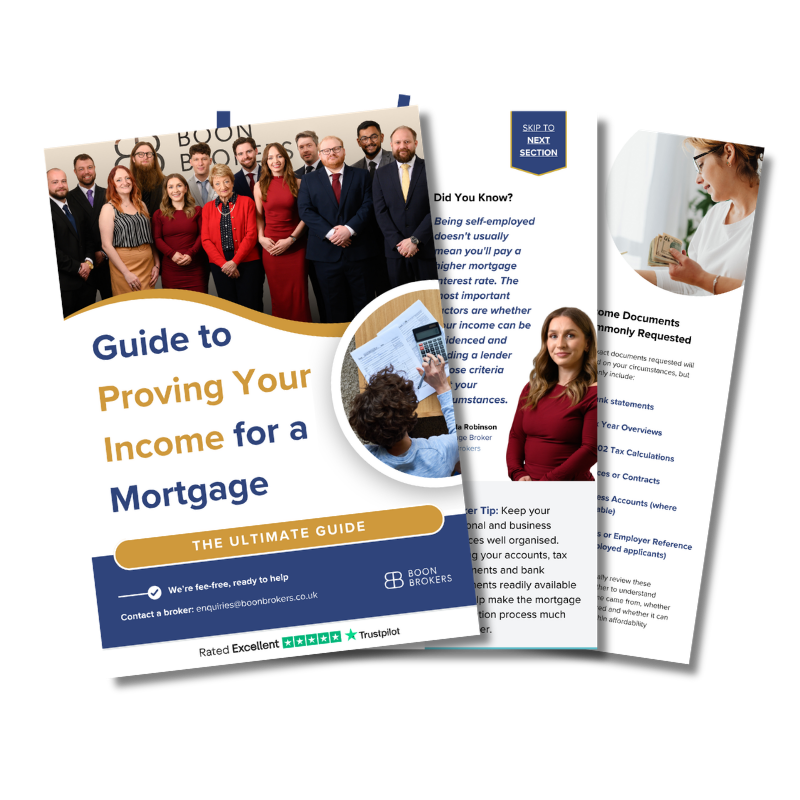
Download Our Free Mortgage Income Guide
Understand lender income requirements and avoid mistakes before applying for your mortgage.
What Problems Can Overtime Income Cause in a Mortgage?
Irregular overtime patterns, providing insufficient evidence, and applying with a lender whose criteria do not fully recognise overtime income are the most common problems when using overtime income in a mortgage application.
The biggest misconception around overtime income and mortgage applications is the assumption that all overtime earnings will automatically be included in your affordability calculations.
Firstly, each lender will have their own criteria and policies regarding overtime income, it is not always guaranteed that overtime will be accepted in affordability calculations.
Secondly, for lenders that do accept overtime income in their affordability calculations, it will be common practice for them to request further evidence that any overtime income has been received consistently over time and forms a reliable part of your overall earnings.
Finally, any large fluctuations between payslips, missing supporting documents, or an application that relies on a short burst of increased income will usually create issues during a mortgage application.
Five Mistakes That Can Affect Your Affordability Assessment
To help you avoid any unnecessary delays or affordability issues, we have listed the most common mistakes borrowers face when using overtime income for a mortgage application:
- Assuming all overtime income will automatically count towards affordability
- Applying for a mortgage before overtime patterns have become consistent
- Relying on a short period of unusually high overtime earnings
- Submitting incomplete payslips or missing supporting documents
- Choosing a lender without checking how they assess overtime income
A key point to note is that many of the reasons overtime income may be rejected by lenders ultimately comes down to reliability rather than the income amount itself.
Taking the time to prepare the right documents carefully, understanding your chosen lender’s criteria, and applying at the right time can all help improve the strength of your application.

Why Is It Important to Get Broker Advice on Overtime Income?
Choosing the right mortgage lender can massively affect how much overtime income is included in your affordability assessment. A mortgage broker can help advise on lenders who would be most suited to your income structure to increase your borrowing power.
Finding the right lender can be one of the most influential factors in securing a mortgage that works for you. While some lenders may be happy to use a large percentage of overtime earnings within their affordability calculations, others may apply stricter limits or refuse to include the income altogether.
If you are someone who regularly works overtime or any other forms of variable income, it’s crucial that you work with a lender whose affordability criteria allows all of your income to be included.
At Boon Brokers, our dedicated mortgage experts compare lenders across the whole market to help identify the mortgage options that best suit your income structure and borrowing needs. As a fee-free mortgage broker, we can help maximise your affordability potential and improve your chances of securing the right mortgage for your situation without ever charging a fee for our advice.
For more information on the different types of income you can use in your mortgage application, read our complete guide on what proof of income is needed for a mortgage and find out exactly which documents you’ll need, different lender assessments, and how to avoid common delays during the mortgage process.
Need Mortgage Advice?
Submit an Enquiry
Frequently Asked Questions
How Many Months of Overtime Income Are Needed for a Mortgage?
Most mortgage lenders will require three to six months of overtime history before accepting it within affordability calculations. Some lenders may request a longer history where overtime has recently started or varies significantly from month to month.
Can Temporary Overtime Income Count Toward Mortgage Affordability?
Yes, temporary overtime income can count towards mortgage affordability, however it will be assessed more cautiously than regular overtime. If the income appears short term, seasonal, or irregular, lenders may reduce the amount they include or exclude it altogether.
Can Overtime Income Help You Borrow More for a Mortgage?
Yes, regular overtime income can increase how much you are able to borrow if a lender includes it within affordability calculations. The amount used will depend on the lender’s criteria and how consistently the overtime has been earned.
Jack Freestone
I’m an established content writer at Boon Brokers, where I write and publish financial and mortgage-focused content across the UK property and lending marketplace. My work covers topics including first-time buyers, remortgaging, equity release, and wider market developments affecting borrowers. I hold a Master’s degree in English Literature from the University of Bedfordshire, graduating with distinction. Since then, I’ve worked across freelance, agency, and in-house roles, building experience writing across a range of subjects, with a focus on topics that directly affect everyday consumers. Today, my writing focuses on making complex financial topics clearer, more practical, and easier for everyday readers to understand.Related Articles
- How Do Self-Employed Applicants Prove Income for a Mortgage?
- Can I Get a Mortgage with a Signed Employment Contract?
- What Happens if You Can’t Prove Income for a Mortgage?
- How Do You Prove Income on a Zero-Hour Contact for a Mortgage?
- Can Bonus and Commission Income Be Used in a Mortgage Application?
- What Are the Mortgage Income Requirements for Freelancers and Contractors?
- How Is Rental Income Used in Mortgage Applications?
- Can I Use Cash Income in a Mortgage Application?
- How Do Part-Time Workers Prove Income for a Mortgage?
- What Are the Mortgage Income Requirements for Agency Staff?
- Can Mortgage Lenders Consider Multiple Income Streams?