Can I Get a Mortgage with a Signed Employment Contract?

Author: Jack Freestone
Finance Writer at Boon Brokers

Reviewed by: Gerard Boon
Managing Director at Boon Brokers

Estimated Read Time: 5 Minutes
Yes. Some mortgage lenders will accept a signed employment contract instead of payslips as proof of income.
It is absolutely possible to get a mortgage with a signed employment contract and many lenders will consider an employment contract for mortgage purposes instead of waiting for payslips.
Instead of focusing on just one missing document, lenders will look at the mortgage application as a whole, including your previous employment history, credit profile, deposit size, and how secure the new role appears.
In this article, we explore exactly when lenders will accept a signed employment contract as proof of income, which supporting documents are needed, and how to find the best lenders. Let’s begin.
In this article...
- When Can Employment Contracts Be Used for a Mortgage?
- What Is the Criteria for Contract-Based Mortgage Applications?
- What Documents Are Needed for a Mortgage Without Payslips?
- Can Using an Employment Contract Affect Your Mortgage?
- Which Lenders Accept Employment Contracts Instead of Payslips?
- Find the Right Mortgage for Your Circumstances
- Frequently Asked Questions
When Can Employment Contracts Be Used for a Mortgage?
When getting a mortgage with a new job, you may be able to use a signed employment contract as proof of income if you haven’t received your first payslip.
Applying for a mortgage with an employment contract will only usually happen when somebody has recently started a new job, secured a promotion, or signed a contract for a role that is dated to start in the future, but has not officially started yet.
The most important consideration to keep in mind is that lenders will want to be confident that the new income is genuine, stable, and likely to start imminently. A fully signed contract that confirms an exact salary, start date, and permanent employment type will help reassure lenders.
In addition, timing can also make a difference. Some lenders may only consider applicants whose start date falls within a certain time-frame. While this will depend on the lender’s criteria, many lenders will typically expect the new role to begin within the next three months.
If you’re planning on providing proof of income using an employment offer contract, then the contract needs to be signed and issued directly by your employer. Lenders will generally never provide a mortgage offer based on a provisional offer or an informal email confirmation.
Ultimately the contract itself will still only form one part of the decision. Lenders will want to look at the complete mortgage application before making a final judgement.
This will include an assessment of previous employment history, credit score, total deposit size, existing financial commitments, and how financially secure the new contract appears overall.
See What Our Clients Have To Say...
What Is the Criteria for Contract-Based Mortgage Applications?
There is no single lending criteria for contract-based mortgage applications that all lenders follow. Each lender will have their own unique criteria and will assess employment stability, affordability, credit history, and deposit size differently.
Each lender will use their own criteria to assess a borrower’s risk by assessing their financial standing, current affordability, total deposit amount, and employment stability.
While some lenders may be comfortable assessing current and projected income from a signed employment contract, many other lenders will have a criteria that requires a minimum of three months’ payslips before considering a mortgage application.
In fact, Boon Brokers’ 2026 research into mortgage application stress, revealed that borrowers found mortgage lenders to be one of the main causes of stress, more than any other party involved in the mortgage application process.
One of the reasons for this is because the same mortgage application could receive completely different outcomes depending on the lenders involved, and highlights the importance of choosing the right lender for your situation.
In the context of the general lender requirements for contract-based mortgage applications, lenders will typically assess:
- The type of employment and whether the role is permanent or temporary
- The date in which the new role starts
- Any previous employment history and evidence of career stability
- Credit score and borrowing history
- Any existing financial commitments, including loans and credit cards
- Total deposit size and overall affordability
- Bank accounts, including overdraft use or missed payments
- Income patterns
As a result, applicants who are moving directly into another permanent role, without a gap in employment, will often be viewed more favourably than somebody moving into short-term or irregular contract work.
Finding a lender whose criteria aligns with your circumstances can make a significant difference to whether your mortgage will be approved or rejected. That’s why working with a whole-of-market broker can help you search the wider mortgage market for a lender that matches your unique circumstances.
What Documents Are Needed for a Mortgage Without Payslips?
Alongside your signed employment contract, most lenders will also request bank statements, proof of deposit, identification, and evidence of your employment history as supporting documents.
Applying with a signed employment contract instead of payslips is considered by lenders as an uncommon mortgage application. As such, lenders will often request additional supporting documentation to help provide them with greater clarity around your financial situation and future income.
To help you understand the different types of documentation that may be requested during the application process, we’ve created a table below that outlines some of the most common documents lenders may ask for and why:
Supporting Documents for Mortgage Applications Without Payslips
| Required Document | Why Lenders May Ask For This |
| Signed Employment Contract | Confirms your salary, contracted hours, employment terms, and official start date. |
| Employer Confirmation Letter | Provides additional reassurance that your employment is genuine and expected to begin as agreed. |
| Previous Payslips (where available) | Demonstrates a recent employment history and helps support a continuous income record before changing jobs. |
| Personal Bank Statements | Shows how your finances have been managed and provides evidence of regular income, spending, and financial commitments. |
| P60 | Helps verify previous annual earnings and supports your recent employment history. |
| Current or Previous Employment Contracts | Demonstrates a stable employment record, particularly where you’re moving between similar roles or employers. |
| Evidence of Additional Income | Supports affordability where bonuses, commission, pensions, benefits, or secondary income form part of the application. |
Making sure that you have the correct documents ready at hand early in the mortgage process can help avoid delays later on.
Ultimately, lenders are looking for consistency across the application. Providing clear and well-organised supporting documents makes it easier for lenders to assess your application without relying solely on your future income.
Speak to a Mortgage Specialist
Find out how a signed employment contract could support your mortgage application today.
Can Using an Employment Contract Affect Your Mortgage?
The biggest limitation of using an employment contract instead of payslips in your mortgage application is that your choice of lenders will become far more restricted.
Applying for a mortgage without using payslips as evidence of income will fall outside the standard criteria used by many lenders.
As a result, there is often a higher risk associated with the borrower which can increase the chances of rejection, especially if the application is submitted to a lender who is not comfortable assessing contract-based income.
Borrowers applying for a mortgage application with only an employment contract will often face:
- A smaller pool of lenders to choose from
- Stricter affordability and eligibility checks
- Requests for additional supporting documentation
- Longer application processing times
Lenders will also differentiate between different types of employment contracts. Where the employment is temporary, the start date is still several months away, or the income relies heavily on bonuses or commission, securing a mortgage is likely to become more challenging.
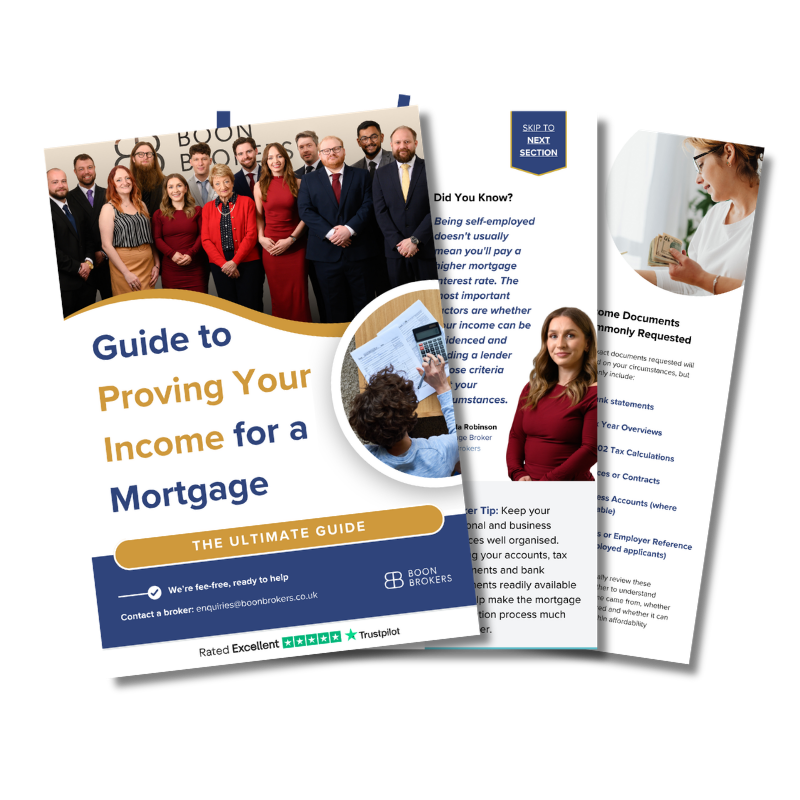
Download Our Free Mortgage Income Guide
Understand lender income requirements and avoid mistakes before applying for your mortgage.
Which Lenders Accept Employment Contracts Instead of Payslips?
Many mainstream lenders will consider applicants with only an employment contract. However, the best mortgage lender will depend on your individual circumstances.
Applying for a mortgage using only a signed employment contract will naturally reduce the number of lenders available to you. With that said, there are still lenders that may consider these applications depending on the wider application and circumstances.
Below, we’ve listed some of the most popular lenders and banks that may consider employment contracts as proof of income:
Lenders That May Consider Employment Contracts Instead of Payslips
| Lender | Criteria Considerations | Important Considerations |
| TSB | May consider applications where the employment contract is dated within the last three months. | Usually strongest where the role is permanent and the start date is close. |
| Nationwide | Can assess applications using a signed contract before payslips are available. | Applicants will typically need a stable employment history and strong overall financial background. |
| Halifax | Often requests supporting documentary evidence alongside the employment contract. | Additional affordability checks or employer confirmation may still be required. |
| Accord | Applications may be considered subject to mortgage underwriting. | Decisions are often made on a case-by-case basis depending on the strength of the wider application. |
| Nottingham | May accept applications supported by a formal employment contract. | More likely to consider straightforward employed cases with stable income history. |
| Skipton | Can review contract-based applications before payslips are available. | The first payslip may still be required before a formal mortgage offer is issued. |
The information included in this table is subject to change as lending criteria and affordability checks are updated.
Because lending criteria can regularly change, the best lender will often depend on your specific circumstances, including employment type, deposit size, credit history, and how soon the new role is due to begin.
This is one of the main reasons many people choose to work with a whole-of-market broker before submitting their mortgage applications.
Rather than approaching lenders individually, an established broker will be able to identify exactly which lenders are currently comfortable with contract-based applications and whether the circumstances are likely to meet their criteria.

Find the Right Mortgage for Your Circumstances
Speaking with a qualified mortgage adviser can help you identify lenders that accept employment contracts instead of payslips and match your application to lenders who suit your circumstances.
Applying for a mortgage with only a signed employment contract can be more complicated than a standard employed application, particularly as each lender will have their own unique criteria on how they treat future income and payslip requirements.
Understanding exactly which lenders you should be targeting and what additional documentation you can provide to help bolster your application is where a mortgage broker can make all the difference to the success of your mortgage.
At Boon Brokers, our dedicated experts regularly help borrowers secure mortgages with unusual or complex circumstances. As a fee-free, whole-of-market mortgage broker, we can compare lenders from across the market to help identify lenders whose criteria are best suited to your needs.
Need Mortgage Advice?
Submit an Enquiry
Frequently Asked Questions
What if My Employment Contract Includes a Probationary Period?
If your new contract includes a probationary period, this will not automatically prevent you from getting a mortgage. Some lenders may apply stricter criteria or require you to complete your probation before applying, while others will assess the strength of your overall application.
Can Couples Apply for a Mortgage if Only One Person Has an Employment Contract?
Yes. Couples can apply jointly even if only one applicant has a signed employment contract instead of payslips. Lenders will assess both applicants’ finances, income, and affordability before making a decision.
Will Lenders Accept a Contract With a Future Start Date?
Yes. However, acceptance will depend on the lender’s criteria and how soon your new role begins. Many lenders will also request additional supporting documents before approving the mortgage application.
Can Graduates Get a Mortgage With a Signed Job Contract?
Yes, some lenders will consider graduates applying with a signed employment contract before they receive their first payslip. Approval is generally more likely where the role is permanent, the start date is approaching, and the contract clearly confirms the salary and employment terms.
Jack Freestone
I’m an established content writer at Boon Brokers, where I write and publish financial and mortgage-focused content across the UK property and lending marketplace. My work covers topics including first-time buyers, remortgaging, equity release, and wider market developments affecting borrowers. I hold a Master’s degree in English Literature from the University of Bedfordshire, graduating with distinction. Since then, I’ve worked across freelance, agency, and in-house roles, building experience writing across a range of subjects, with a focus on topics that directly affect everyday consumers. Today, my writing focuses on making complex financial topics clearer, more practical, and easier for everyday readers to understand.Related Articles
- How Do Self-Employed Applicants Prove Income for a Mortgage?
- Can Overtime Income Be Used in a Mortgage Application?
- What Happens if You Can’t Prove Income for a Mortgage?
- How Do You Prove Income on a Zero-Hour Contact for a Mortgage?
- Can Bonus and Commission Income Be Used in a Mortgage Application?
- What Are the Mortgage Income Requirements for Freelancers and Contractors?
- How Is Rental Income Used in Mortgage Applications?
- Can I Use Cash Income in a Mortgage Application?
- How Do Part-Time Workers Prove Income for a Mortgage?
- What Are the Mortgage Income Requirements for Agency Staff?
- Can Mortgage Lenders Consider Multiple Income Streams?