What Happens After My Offer to Buy a House is Accepted?

Author: Jack Freestone
Finance Writer at Boon Brokers

Reviewed by: Gerard Boon
Managing Director at Boon Brokers

Estimated Read Time: 5 Minutes
Great news – your offer to buy a house has just been accepted, but what does this mean for your mortgage? Does the home buying process just automatically move forward, or are there still some steps that you need to complete before you can move into your dream house?
While getting an offer accepted on a house is a big step, it also becomes the point where things start to feel more urgent. Your mortgage moves forward, a solicitor begins the legal process, and checks on your chosen property will be arranged. All of this can often happen at the same time, with different timelines and expectations that you need to keep track of.
In this article, we walk you through exactly what you need to know about what really happens after accepting an offer on a house, from how the mortgage process works to the stages that follow, and everything in-between.
In this article, we walk you through exactly what happens after accepting an offer on a house. We will cover how your mortgage will progress, what stages will follow, and what you can expect before your purchase is complete. Let’s begin.
What Are the Next Steps After Your Offer Is Accepted?
Once your offer to buy a property is accepted, then the next steps move to progressing your mortgage and starting the legal process with your chosen solicitor.
For many buyers, this stage can start to feel overwhelming as there are often multiple things happening at once. However, it’s important to note that while timelines can vary depending on your lender, solicitor, and other parties involved, the overall process still follows a clear order from one stage to the next.
So, what do you need to do?
Rather than trying to manage everything at once, after your offer to buy a property has been accepted, your focus should instead be on addressing anything that could hold up the final buying process.
While much of the work – lender’s property valuation, solicitors carrying out legal searches, and the seller’s preparing contracts – is handled in the background, there are still some key steps that you need to take attend to as soon as possible to keep everything on track, including:
Confirm Your Mortgage Application
If you have already secured a mortgage agreement in principle (MIP), this is where your full application needs to be submitted and progressed. If you’re working with a trusted mortgage broker – like Boon Brokers – then they will usually handle this step for you. With that said, it’s important to stay responsive so that there are no delays in your mortgage application.
Contact A Solicitor Early
While full conveyancing work will usually progress once your mortgage offer is in place, it’s still a good idea to contact a solicitor early in the process. This allows you to confirm they’re prepared to act on your behalf and helps avoid delays once your mortgage offer has been issued.
Prepare for the Lender’s Property Valuation
Your chosen lender will arrange a valuation to confirm the property is suitable for the mortgage. This usually happens automatically alongside your mortgage application, but it’s worth knowing that this is one of the first key checks in the process.
Decide Whether to Arrange a Survey
While an individual property survey isn’t always required, it is often recommended. This is your opportunity to get a clearer understanding of the property’s condition before moving any further with your purchase.
Communication Is Key
With all of these steps happening simultaneously, it’s best to keep an eye on your emails and an ear to your phone as you may be asked for information or decisions as the process moves forward. Keeping on top of these will help avoid any unnecessary delays and keep everything progressing smoothly.
In short: you don’t need to worry about instigating and controlling every part of the process, but staying organised and responsive at this stage will make a noticeable difference as your mortgage application and property purchase progress.
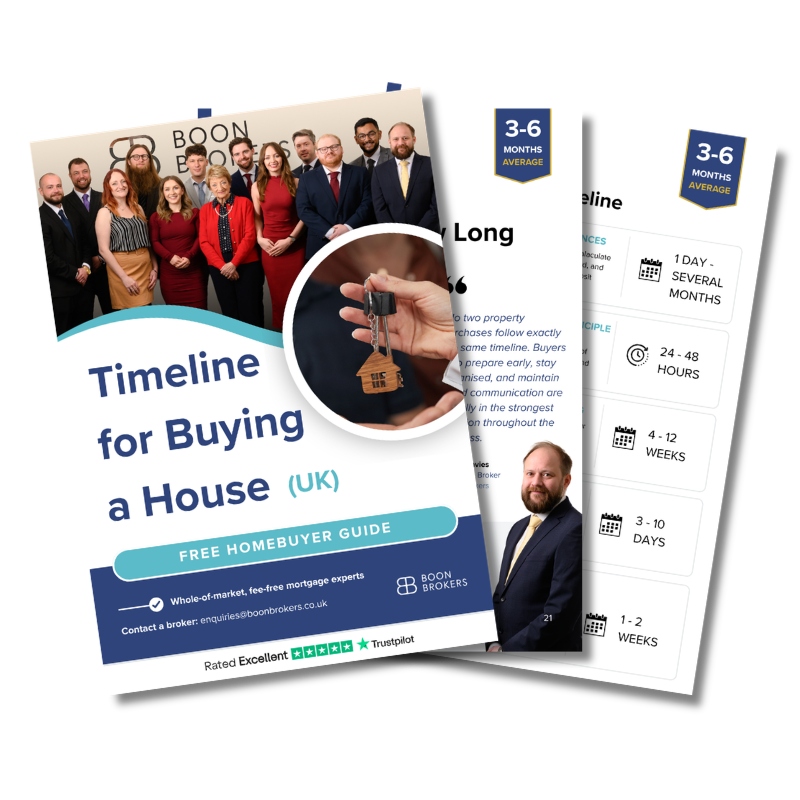
Download Our Free Homebuying Timeline Guide
Sign up for our newsletter to get your full Mortgage Timeline Guide. Simple, helpful, and completely free.
What Are the Initial Steps in a Mortgage Application?
The initial steps in your mortgage application will generally begin with securing an Agreement in Principle (AIP) from your chosen lender. While this is not an official confirmation of an approved mortgage, an AIP will provide you with an estimated loan amount that can help you narrow your search to properties that are realistically within your budget.
Once you have found a property that ticks your boxes and an offer is agreed, the process moves forward into the full application stage. This is where the lender will begin a more detailed review of your mortgage application, including your income, affordability, and repayment plan for the loan, before deciding on whether to issue a formal mortgage offer.
Alongside this, the property itself will also be assessed by your chosen lender through a valuation. This is to make sure that the property is worth what you’re paying, helping to reduce the lender’s risk if repayments aren’t maintained and your mortgage defaults.
To put this into a step-by-step checklist, your mortgage will typically move forward in the following stages:
- Agreement in Principle (already completed)
- Full mortgage application submitted
- Lender assessment and valuation
- Official mortgage offer issued
If you are working with a trusted mortgage broker – like Boon Brokers – and your application has been professionally prepared, then much of this work will happen in the background. Your dedicated adviser will manage the communications with your chosen lender to ensure everything is kept on track.
We've helped thousands buy a home...
Are Booking Surveys and Property Checks Required?
Booking an independent property survey is not required as part of the mortgage process, however in most cases, they are always recommended to ensure there are no structural deficiencies with your chosen property.
This is where an independent survey and a lender’s valuation can often be confused.
A lender’s valuation can be carried out both automatically using internal systems or physically, and this will be to primarily confirm whether or not the property is suitable for your mortgage request and not to provide you with a detailed report of its condition.
On the other hand, a survey is something that you will need to arrange independently and can provide you with a detailed overview of the property in detail. It’s best to view a survey in the same way as an MOT for a car – it will provide you with a clearer view of the property’s condition and highlight any issues before you fully commit.
Because of this, most buyers choose to arrange a survey alongside their mortgage application, rather than waiting until later. Again, while this is not mandatory, it’s often seen as a sensible step, particularly if you want to avoid unexpected issues further down the line.
To give you a clearer idea of what a typical survey will cover, we have provided an overview below:
What a Property Survey Covers
| Area Reviewed | What’s Being Assessed | What Could Raise Concerns |
| Core Structure | Walls, foundations, overall stability | Cracking, movement, signs of subsidence |
| Roof & Drainage | Tiles, guttering, water flow | Leaks, sagging areas, poor drainage |
| Damp & Moisture | Internal walls and airflow | Persistent damp, mould, timber decay |
| Loft & Hidden Areas | Insulation, ventilation, timber | Poor airflow, hidden leaks, pest damage |
| Windows & Doors | Condition, seals, usability | Heat loss, damaged frames, security risks |
| Visible Utilities | Boiler, electrics, plumbing (visual) | Outdated systems, safety concerns |
| External Areas | Boundaries, walls, outbuildings | Instability, drainage issues |
| Alterations | Extensions or structural changes | Missing approvals, poor workmanship |
In the scenario that a property survey does highlight any issues, it doesn’t necessarily mean the purchase can’t or shouldn’t go ahead. Some buyers choose to reduce the offer after the survey, particularly where repair work is needed. Others may choose to continue as planned, but with a clearer understanding of what they’re purchasing.
Speak to a Mortgage Broker
Learn what happens after acceptance and how the buying process moves forward from here.
Instructing a Solicitor and Starting Conveyancing
With your offer now agreed, the next step is to instruct your chosen solicitor so they are prepared to act on your behalf once your mortgage offer has been issued. This is known as conveyancing.
In short: your solicitor’s role is to handle the legal side of the purchase, making sure the property can be transferred to you without any issues. This includes reviewing contracts, carrying out property searches, and raising enquiries with the seller’s solicitor where needed.
Crucially, your solicitor will need your mortgage offer in place before contracts can be exchanged, as it confirms how the purchase will be funded.
The key is to stay responsive should they request any further information. While much of the process is handled for you, the speed in which things progress will often depend on how quickly different parties are able to respond.
Get in Touch With a Mortgage Broker
Having your offer accepted is an exciting step, but it also sets everything else in motion. From this point, your mortgage, legal work, and property checks all begin to take shape. This is where having the right support in your corner can make all the difference.
Rather than trying to manage each step yourself, working with a trusted mortgage broker can relieve your stress and keep everything organised and on track.
At Boon Brokers, our dedicated mortgage experts can help guide you through each stage, from your mortgage application to the purchase of your dream house. As a fee-free, whole-of-market broker, we will compare a wide range of lenders to ensure that you secure the mortgage that matches your needs, ensuring your application is professionally presented and ready to be approved.
Whether you’ve had an offer accepted or are at the start of your mortgage journey, contact Boon Brokers and speak with a dedicated adviser for tailored advice today.
For a complete overview of the mortgage and home buying process, read our guide: The 2026 Timeline to Buying a House in the UK, which covers every stage from offer through to completion.
Need Mortgage Advice?
Submit an Enquiry
Frequently Asked Questions
Is a Mortgage Offer Legally Binding When Buying a House?
A mortgage offer only confirms that a lender is willing to provide your loan, but it isn’t legally binding on the property purchase. The transaction only becomes legally binding once contracts are exchanged. Until then, either party can withdraw, even if your mortgage offer has already been issued.
Can I Pull Out of a House Purchase After My Mortgage Offer Is Accepted?
Yes. Even after you have had an offer accepted to buy a property, you can still pull out of the property purchase, right up until contracts are exchanged. However, it’s important to note that depending on the stage you’ve reached, you may lose money that has already been spent on surveys, solicitor fees, or other costs linked to the purchase.
Can a Property Survey Affect Buying a House?
Yes. If a survey identifies problems with the property, it can affect both your mortgage and your decision to proceed with the purchase. In some cases, a lender may carry out further checks or change their terms, while buyers may renegotiate the price or request repairs before moving forward.
Jack Freestone
I’m an established content writer at Boon Brokers, where I write and publish financial and mortgage-focused content across the UK property and lending marketplace. My work covers topics including first-time buyers, remortgaging, equity release, and wider market developments affecting borrowers. I hold a Master’s degree in English Literature from the University of Bedfordshire, graduating with distinction. Since then, I’ve worked across freelance, agency, and in-house roles, building experience writing across a range of subjects, with a focus on topics that directly affect everyday consumers. Today, my writing focuses on making complex financial topics clearer, more practical, and easier for everyday readers to understand.Related Articles