How Many Viewings Before Making an Offer on a House?

Author: Jack Freestone
Finance Writer at Boon Brokers

Reviewed by: Gerard Boon
Managing Director at Boon Brokers

Estimated Read Time: 5 Minutes
The age old question: how many viewings does it take before making an offer on a house? While there is no right or wrong, many of us don’t even ask this question until we’re already in the thick of it, making that all important decision on whether “this is the one” or to keep scrolling on more listings.
And in reality, it is rarely just about the property itself. As you continue with viewings, you’re also working within a wider timeline that brings into question how quickly you can get a mortgage in place, how competitive the market feels, and whether you’re in a position to act when the right property comes up.
That’s where the pressure tends to build. One viewing can turn into five, and before you know it, the questions start to build: Is there a minimum number of viewings I need to make? Is it better to act quickly? Is an offer now jumping in too early?
In this article, we dive into the specifics on how many viewings buyers typically have, how long the complete process will usually take, and how you can know when it makes sense to move forward. Let’s jump in.
What’s the Average Number of Viewings Before Making an Offer?
The average number of house viewings before buying a property falls between 5 and 10 viewings, but it’s important to note that there is no fixed rule surrounding this.
It goes without saying that everyone’s looking for something slightly different in a home, and so it’s only natural that the number of viewings follows this variation. For some, it might be about finding the right layout or location. For others, it might take a few more viewings to get a feel for a planned project or renovation planned in their mind for the future.
Research from property platforms like Rightmove and Zoopla consistently shows that the number of viewings also tend to correlate with the current housing demand. In busier markets, homes can receive multiple viewings within days of being listed, which often leads to buyers making decisions quicker.
A crucial point to make here is that focusing on the “right” number of viewings is not usually helpful and can actually lead to unnecessary stress or complications. What really matters is reaching a point where you feel confident that the property you want to make an offer on meets your needs and fits within your budget.
With this in mind, having an Agreement in Principle at this time can help push you forward when you find the right property. It will provide you with a clear understanding of what you can afford and shows the estate agent that you’re in a position to move forward when you decide to make an offer.
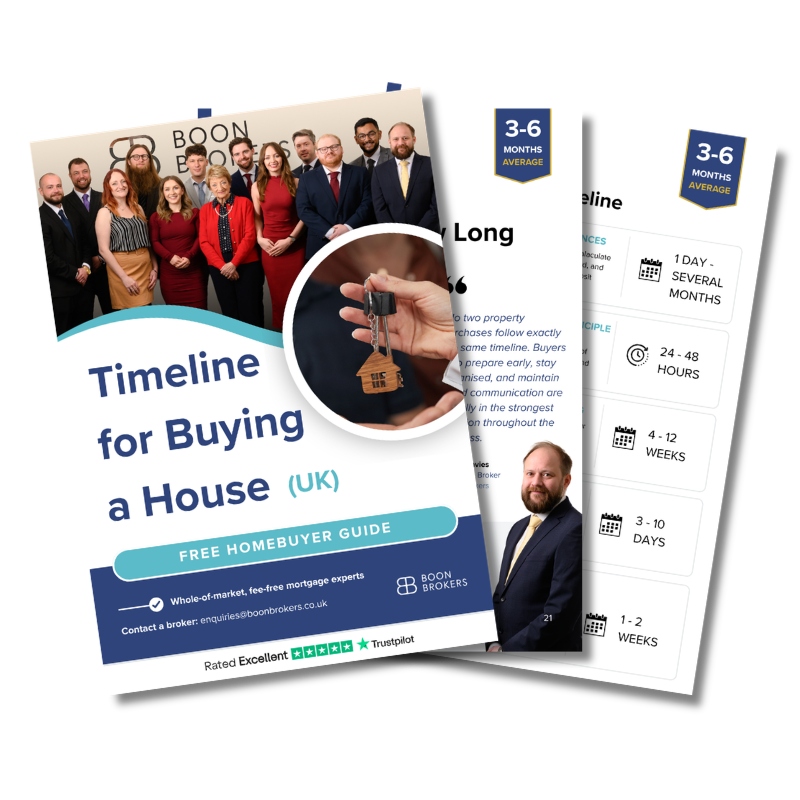
Download Our Free Homebuying Timeline Guide
Sign up for our newsletter to get your full Mortgage Timeline Guide. Simple, helpful, and completely free.
How Long Do Buyers Typically Spend Viewing Properties?
According to research from Property Reporter, most house buyers will spend around 20 to 40 minutes at each viewing, although the average house viewing time will naturally depend on how serious the buyer’s interest is and how competitive the property feels.
The average time to view a house is often shorter on a first visit, especially if your calendar has to fit multiple viewings into one day. But when a property stands out, it’s common to go back for a second, third, or fourth look, taking the time to properly assess the property layout, condition, and overall feel of the area.
That said, similarly to how we covered the average viewings, both your viewing timeline and your wider property search will always be personal. While some buyers will feel a “click” and want to move quickly, others might prefer to take their time and explore a broader range of options.
In short: while taking note of the different averages of house viewings can be useful as a rough guide, the pace you choose to move at should always come down to what feels right for you and your circumstances.
As we’ve noted above in our previous section, this is where preparation can really play a pivotal role. If you’ve already secured an Agreement in Principle and have a clear idea of your budget, the decision to move forward with a property can happen quickly.
We've helped thousands buy a home...
What Factors Affect Your Property Search?
There are several key factors that will influence your property search, including your finances, the market at the time you’re buying, type of property, location, and most importantly, how clear you are on what you’re looking for.
While there are a host of practical tips to find a house faster online, it can be best practice to actually take a step back, create a priority list, and understand exactly what’s most important to you.
To make things easier, we’ve created a quick checklist of key factors to think about as you start to prioritise your list move forward with your property search:
Factors to Consider During Your Property Search
| Factor | What It Means for You | Why It Matters |
| Mortgage Ready | Have you got an Agreement in Principle in place? | An AIP can help guide your property search and can be used to show sellers that you’re ready to move forward with an offer. |
| Clarity on Your Priorities | A list of your “must-haves” vs your “nice-to-haves” | Even a quick list of non-negotiables can help reduce wasting time with properties that don’t match your needs. |
| Local Market Conditions | How competitive is the area that you’re searching in? | Location can play a key part in property prices as well as influencing how quickly properties sell. |
| Seller’s Position | Whether the seller is in a chain or ready to move | This can influence how quickly the buying process can happen, once you make an offer. |
| Property Type & Condition | Freehold vs leasehold, modern vs renovation | Some properties require more consideration, checks, or long-term planning. |
| Confidence in Your Decision | How comfortable do you feel with moving forward? | You need to be confident that you’ve understood your options and have decided on the right outcome. |
A common misconception is that viewing more properties will automatically make you feel more confident about your decision. In reality, having a clear idea of what you’re looking for will help narrow your focus, reduce the need for multiple viewings, and make it easier to move forward with your purchase when the right property comes along.
Speak to a Mortgage Broker
Whether it’s your 1st viewing or your 4th, don't let your dream home slip away. Get in touch.
When Should I Make an Offer on a House?
The time for making an offer on a house is once you’ve found a property that aligns with your requirements, sits comfortably within your budget, and you’re in a position to move forward.
In practice, the best time to make an offer on a house will always come down to personal circumstances and should never be associated with the “right” amount of property viewings or speed in which you can process the purchase. For most, buying a property is a big financial commitment and it should be about everything coming together in the right way.
For most buyers, this moment tends to come when a few things start to line up naturally:
 You’ve seen enough properties to understand what good value looks like
- The property you’ve settled on meets your non-negotiables, not just your “nice-to-haves”
- You have a clear picture of your budget
- You feel confident moving forward, rather than a need to keep searching
 You’ve seen enough properties to understand what good value looks like
While it may sound cliche, preparation is key. If you’ve already enquired about a mortgage with affordability checks confirmed and an Agreement in Principle ready, then you can quickly continue with your purchase, rather than trying to organise everything after your offer is accepted.

Do You Need a Mortgage Broker?
When it comes to making an offer on a property, there’s no strict requirement to use a mortgage broker. However, having a trusted mortgage broker – like Boon Brokers – in your corner, can make all the difference when it comes to the speed and efficiency of your property purchase.
With the right support in place early on, the focus shifts from reacting to timelines to staying ahead of them. Having a clear understanding of your budget, access to suitable lenders, and a structured application ready to go, puts you on the front foot ahead of any buyer competition.
At Boon Brokers, we offer fee-free mortgage advice and whole-of-market access, allowing us to compare a wide range of lenders and identify options that match your needs.
We can arrange your Agreement in Principle early in your search, helping you approach viewings knowing exactly where you stand and putting you in a stronger position when you’re ready to make an offer.
If you’re preparing to start your property search, or want clarity on your next steps, contact Boon Brokers and speak with an experienced mortgage adviser today.
For a deeper dive into the property ladder timeline, read our 2026 Timeline to Buying a House in the UK, which explores each stage in detail, from your mortgage offer through to your property purchase.
Need Mortgage Advice?
Submit an Enquiry
Frequently Asked Questions
Can You Make An Offer After the First Viewing?
Yes, you can make an offer after the first viewing. If the property meets your needs and you feel a confident “click”, there’s no requirement to wait or have future viewings at all. This is actually quite common in competitive markets. However, for most buyers it is still advised to arrange a second viewing just to reassure the property meets your needs, before committing to such a significant financial commitment.
Can I Make an Offer Below the Asking Price?
Yes, offering below the asking price is quite common in today’s housing market, particularly if the property has been on the market for a while or needs renovation work to be carried out. The key is to base your offer on local property values, the condition of the home, and market demand, rather than simply offering low without justification.
Can I Withdraw or Change My Offer After Submitting It?
Yes, you can withdraw or change your offer at any point before contracts are exchanged. This gives you flexibility if circumstances change, such as survey results or finances. However, frequent changes can affect how sellers and agents view your reliability, so it’s best to proceed carefully.
Jack Freestone
I’m an established content writer at Boon Brokers, where I write and publish financial and mortgage-focused content across the UK property and lending marketplace. My work covers topics including first-time buyers, remortgaging, equity release, and wider market developments affecting borrowers. I hold a Master’s degree in English Literature from the University of Bedfordshire, graduating with distinction. Since then, I’ve worked across freelance, agency, and in-house roles, building experience writing across a range of subjects, with a focus on topics that directly affect everyday consumers. Today, my writing focuses on making complex financial topics clearer, more practical, and easier for everyday readers to understand.Related Articles