What Are the Best Mortgages for NHS Staff?

Author: Jack Freestone
Finance Writer at Boon Brokers

Reviewed by: Gerard Boon
Managing Director at Boon Brokers

Estimated Read Time: 5 Minutes
There is no one-size-fits-all answer when it comes to finding the best mortgages for NHS staff, which naturally raises the question: how do you know which mortgage option is right for you?
While on paper, working for the NHS should make getting a mortgage straightforward, the truth is that mortgage applications can be a little more nuanced. Rotating shifts, overtime, and bank work can all influence how lenders assess your income, which is why some mortgage options are more suitable to NHS workers than others.
In this article, we jump into everything you need to know about what really makes a mortgage ‘best’ for NHS staff, including which lenders are more flexible, and how you should approach your application in a way that gives you the best chance of success. Let’s begin.
In this article...
- What Makes a Mortgage Best for NHS Staff?
- What Are the Best Mortgage Types for NHS Staff?
- Which High Street Lenders Support NHS Workers?
- Do All Lenders Recognise NHS Income Types?
- Should You Use a Broker for Better Lender Access?
- Get in Touch with a Specialist NHS Mortgage Broker
- Frequently Asked Questions
What Makes a Mortgage Best for NHS Staff?
First and foremost it’s vital to understand that there is no single lender or mortgage product that will be the ‘best mortgage’ for NHS staff. Ultimately, what works well for one NHS employee may not suit another.
Most importantly, a mortgage should be shaped around your individual circumstances. That includes your current income, financial position, and what you’re planning longer term. For some, that might mean prioritising stability with a fixed rate. For others, that could be prioritising flexibility, a shorter term, or even keeping the upfront deposit as low as possible. Each of these decisions are important considerations and will naturally guide the type of mortgage deal you choose, and the lender you approach.
In addition to this, it’s also important to understand that lenders don’t all work or assess applicants in the same way. Each one has their own assessment criteria, and these can change over time. Because of that, there isn’t a single lender or product that can confidently be described as ‘the best’.
In short: The best mortgage will always come down to what fits your specific situation and your plans for the future at that point in time.
For NHS staff, a key part of this will come down to how your income is assessed. Due to the nature of NHS work, where income often includes shift patterns, overtime, and additional income enhancements, some lenders are more understanding of this and are willing to take a large proportion of these additional earnings into account.
As a result, the best mortgage lenders for NHS staff will often come down to their individual lending criteria and how flexible they are when assessing affordability. In practical terms, this means that you should be looking for lenders that offer:
 A more flexible approach to income assessment, especially where shift patterns or overtime are important involved
- Higher income multiples for NHS Staff roles or experience levels
- Access to a low deposit mortgage for NHS staff, where saving a larger deposit isn’t always realistic
 A more flexible approach to income assessment, especially where shift patterns or overtime are important involved
Ultimately, the ‘best’ mortgage is less about chasing a specific product, and much more about finding a lender that understands your specific income, your role, and what you’re trying to achieve.
See What Our Clients Have To Say...
What Are the Best Mortgage Types for NHS Staff?
The same rules apply to NHS staff that would apply to any other looking to secure the best mortgage type; the most suitable mortgage will usually come down to how you want your repayments to work and how predictable you need things to be over time.
There are a variety of different mortgage types and each option will have both their pros and cons. As such, it’s more about understanding what each mortgage offers you, and how it fits into your life.
Many lenders provide mortgage products designed with key worker roles in mind, including healthcare and NHS professionals, teachers, and emergency service workers. These products are often built to reflect the way these roles are paid and structured and can offer more flexibility around income and, in some cases, higher borrowing potential.
When it comes to choosing a mortgage type, most NHS employees will typically be deciding between a few common options:
- Fixed-Rate Mortgages
Fixed-rate mortgages keep your interest rate and monthly payments the same for a set period, usually between two and five years. This makes them a popular choice if you want certainty over your outgoings, particularly if your income varies with shifts or overtime. The trade-off is less flexibility, as leaving the deal early can lead to early repayment charges.
- Variable or Tracker Mortgages
Tracker mortgages move in line with the Bank of England base rate, so your monthly payments can rise or fall over time. They can work well if you expect your income to increase or you’re comfortable with some variation in your outgoings. That said, it’s important to factor in the risk of rate increases, as these will directly affect what you pay each month.
- Discount Mortgages
Discount mortgages offer a reduced rate for an initial period, based on the lender’s standard variable rate. This can mean lower starting payments, which may appeal if you’re looking to keep initial costs down. The drawback, however, is that because the rate can change, your repayments aren’t guaranteed to stay the same.
In addition to these mortgage types, some lenders will also provide targeted mortgage products. For example, Kensington Mortgages offers a hero mortgage loan that is exclusively available to keyworkers and caters to the needs of different income structures.
While not a mortgage type on its own, using professional mortgage services can help you access lenders who understand NHS pay structures, including banding, overtime, and bank work. This can make a real difference when it comes to finding a deal that reflects your full income.
Gaining access to the full range of mortgage products is often much easier when working with a trusted, whole-of-market mortgage broker. At Boon Brokers, our expert advisers provide completely fee-free advice and have extensive experience supporting NHS applicants. We work with a wide range of lenders who understand how NHS income is structured to ensure you get the mortgage that matches your needs.
Speak to an NHS Mortgage Specialist
Let us help you find the best mortgage. Get in touch.
Which High Street Lenders Support NHS Workers?
There are several well-known high street lenders in the UK that offer mortgage products either designed with key workers in mind, such as NHS staff, or with criteria that are more flexible in how they assess income calculations. This is specifically useful for those who are searching for increased borrowing rates or specific fixed-term offers.
The main UK lenders that offer professional mortgages for NHS workers may offer unique benefits of support when it comes to factoring in overtime, shift allowances, and a borrower’s overall affordability.
Below is a quick overview of how some of the most well-known lenders approach mortgage applications for NHS staff:
NHS Mortgage Benefits by Lender
| Lender | Key NHS Benefit | Typical Support Level |
| HSBC | Flexible Income Assessment | May consider overtime and shift allowances where they are regular and well evidenced |
| Nationwide | Helping Hand Scheme | Can offer up to 5.5x income multiples through its Helping Hand scheme, subject to eligibility |
| Barclays | Professional Mortgages | Offers enhanced borrowing for certain qualified medical professionals (e.g. doctors and dentists) |
| Halifax | Low Deposit Options | Offers low deposit mortgages and can consider bank work where income is consistent and evidenced |
| Santander | Newly Qualified Professionals | May lend based on a signed contract prior to starting, particularly for newly qualified applicants |
While this table provides a useful snapshot of some popular lenders open to NHS employees, it’s important to remember that their criteria can vary quite significantly. When it comes to applying for a mortgage, understanding how each lender assesses NHS income can make a real difference to the options available to you.

Do All Lenders Recognise NHS Income Types?
Not all lenders recognise NHS income in the same way. As we’ve touched on earlier in this article, the way that your earnings are structured can directly affect how much you’re able to borrow. If you work for the NHS, it is very common to have both a consistent base salary (structured around the NHS payment bands), alongside additional earnings such as overtime, night pay, and shift work.
Some mortgage lenders for key workers are more flexible and may take into account:
- Regular overtime
- Shift allowances and unsocial hours pay
- Bank or agency work with a consistent track record
However, other lenders may only allow for a basic salary to contribute towards your affordability calculations. This can result in limiting your overall borrowing amount, even if your total income (that includes additional earnings) is much higher overall.
In short: This is why working with a trusted mortgage broker, or choosing a lender that understands the complexity of NHS pay and variable income, can make a significant difference.
To give you a clearer idea of what lenders look for, it helps to understand how additional earnings are assessed. In most cases, they’ll be looking for:
- A consistent track record of income over time
- Clear evidence of any additional income through payslips
- Confidence that any additional income will continue
If your earnings vary, the outcome often depends on how consistently they can be evidenced and how much risk a lender places on them.
Should You Use a Broker for Better Lender Access?
In most cases, yes. Using a trusted whole-of-market broker can give you better access to lenders, particularly if your income or situation doesn’t fit a ‘standard’ lender blueprint.
Ultimately, when you work with a trusted mortgage broker you’re not limited to a single lender’s criteria. Instead, you can access a wider part of the market and focus on lenders that offer mortgage products that align more closely to your situation.
For NHS staff, this becomes particularly important, as income often includes banding, overtime, and shift work. When you go directly to a bank or building society, you’re limited to their own products and criteria. By comparison, having access to a wider part of the market allows you to focus on lenders that take a more suitable view of how your income is assessed.
In practice, this is where working with brokers that access specialist lenders for NHS staff can have the most impact. A broker can help you:
- Focus your search on lenders that are more aligned with NHS pay structures
- Avoid applying to lenders whose criteria may not suit your income
- Present your application with the right level of detail and supporting evidence
- Access a broader range of products, including those not always visible when going direct
If you’re unsure on where to start, speaking with a broker can be the best starting point to help get a clearer picture of what’s available and how your income is likely to be assessed.
At Boon Brokers, we work closely with NHS applicants to help identify lenders that are better suited to their income structure, ensuring your application is positioned in a way that reflects your full earning potential.
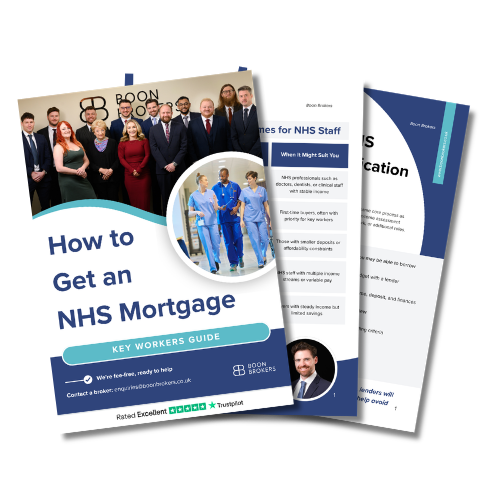
Download Our Free NHS Mortgage Guide
Sign up for our newsletter to get your full NHS Mortgages Guide – practical, shareable, and ready when you need it.
Get in Touch with a Specialist NHS Mortgage Broker
When it comes to finding the right mortgage as an NHS employee, there is no single option that will work for everyone. The best approach will always depend on how your personal income is structured and come down to exactly what mortgage type you’re looking to secure.
Rather than applying outdated or generic lending rules, the focus should be on securing a mortgage that works for you. This includes finding a lender that takes your full income into account, including elements like banding, overtime, and bank shifts.
At Boon Brokers, we offer fee-free advice and whole-of-market access, allowing us to compare a wide range of lenders to find the mortgage options that genuinely match your circumstances. Our expert advisers have extensive experience supporting NHS applicants, helping to identify lenders who understand how your income works and presenting your application in a way that reflects your full earning potential.
If you’re ready to start your mortgage journey, contact Boon Brokers and speak with one of our advisers today.
Want to learn more about NHS mortgages?
Read our complete Key Workers Guide on How to Get an NHS Mortgage for a more detailed breakdown of how to find a mortgage that suits your situation.
Need Mortgage Advice?
Submit an Enquiry
Frequently Asked Questions
Can Brokers Access Exclusive Mortgage Deals?
Yes, some brokers may have access to certain deals that aren’t always available directly, including products designed for specific professions like NHS staff. More importantly, they can help you find lenders whose criteria suit your income, which can make a bigger difference than the deal itself.
Can NHS Staff Get a Shared Ownership Scheme?
Yes, NHS staff can apply for shared ownership schemes if they meet the eligibility criteria. These schemes allow you to buy a share of a property and pay rent on the rest, which can make getting onto the property ladder more achievable if saving a larger deposit is difficult.
Which Lenders Give Higher Income Multiples for NHS Staff?
Some lenders offer higher income multiples, particularly for certain roles such as doctors or dentists. Schemes like Nationwide’s ‘Helping Hand’ or Kensington Mortgages ‘Hero Mortgages’ can increase borrowing potential, although this depends on your income, affordability, and overall financial profile.
Which Mortgage Lenders Accept NHS Payslips?
Most lenders accept NHS payslips, but the key difference is how they assess additional income. Overtime, shift allowances, and bank work aren’t always treated the same, so choosing a lender that takes a more flexible approach can have a direct impact on how much you can borrow.
Jack Freestone
I’m an established content writer at Boon Brokers, where I write and publish financial and mortgage-focused content across the UK property and lending marketplace. My work covers topics including first-time buyers, remortgaging, equity release, and wider market developments affecting borrowers. I hold a Master’s degree in English Literature from the University of Bedfordshire, graduating with distinction. Since then, I’ve worked across freelance, agency, and in-house roles, building experience writing across a range of subjects, with a focus on topics that directly affect everyday consumers. Today, my writing focuses on making complex financial topics clearer, more practical, and easier for everyday readers to understand.Related Articles
- How Does NHS Banding Affect Your Mortgage Application?
- Can You Get a Mortgage as a Newly Qualified NHS Staff?
- Can You Get a Mortgage as an NHS Locum?
- Do Mortgage Lenders Accept NHS Overtime, Nights, and Weekend Pay?
- Do NHS Workers Get Better Mortgage Rates or Discounts?
- Is It More Difficult to Get a Mortgage When Working for the NHS?
- What Is the Mortgage Process for an NHS Worker?
- Which Mortgage Broker Should You Use for an NHS Mortgage?